Streamline Your Atlanta Office Operations
Atlanta moves fast. To keep up, businesses need document systems that remove friction, cut costs, and keep compliance airtight. This guide lays out practical document-management approaches — copier leasing, workflow automation, and a move toward a paperless office — and shows how managed IT supports each step so your team can focus on growth, not paperwork.
What Are Document Management Solutions — and Why They Matter in Atlanta?
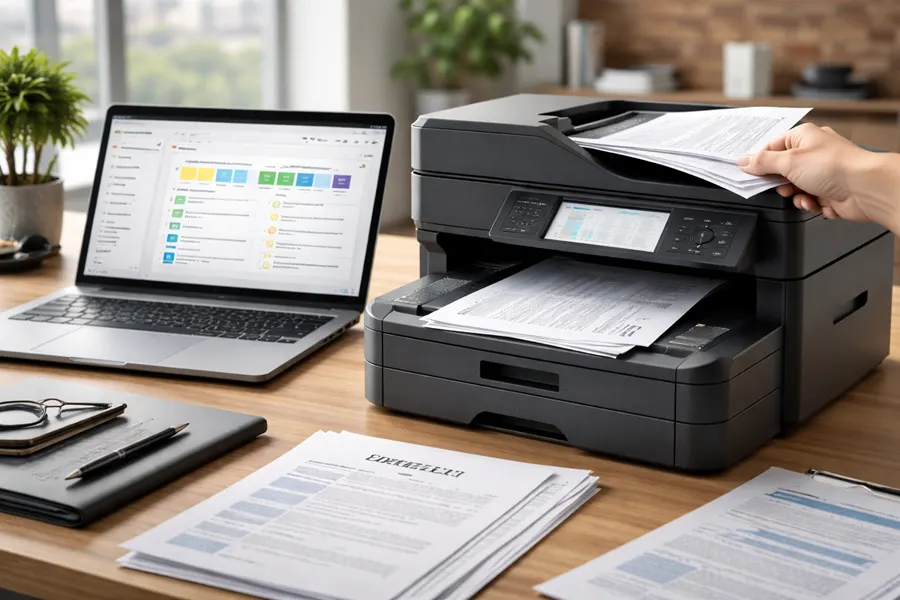
Document management combines software, hardware, and repeatable processes to capture, store, organize, and track both digital files and scanned paper records. Done right, these systems simplify workflows, boost collaboration, and tighten data protection for Atlanta organizations.
The benefits include:
- Improved Accessibility: Digitized records are accessible remotely, accelerating collaboration.
- Enhanced Security: Role-based access, encryption, and audit logs cut the risk of unauthorized access.
- Cost Savings: Less paper, printing, and offsite storage lower operating costs.
Automated Business Machines (ABM) tailors document programs to operational and regulatory requirements across Georgia and Alabama.
How Copier Leasing Supports Business Efficiency in Atlanta
Leasing copiers lets you adopt current technology without a large upfront capital outlay. You can bundle service, spread payments, and upgrade equipment to reduce downtime and keep staff productive.
Viewed as strategic financing, leasing can speed modernization while limiting investment risk.
Measuring Leasing Effectiveness for Business Efficiency
Leasing can be more than a financing option — it’s a practical way to modernize fixed assets while managing investment exposure. To capture full value, organizations should apply structured evaluation methods that measure lessee outcomes and identify the primary factors driving success.
The model of evaluation of efficiency of leasing services, S Latipova, 2024
Practical advantages of copier leasing include:
- Cost-Effectiveness: Preserve capital with predictable payments.
- Flexibility: Select terms that align with cash flow and changing needs.
- Access to Upgrades: Stay current as features and security improve.
How Workflow Automation Streamlines Document Processes
Workflow automation removes repetitive manual steps — routing approvals, extracting data, logging actions — so documents move faster, with fewer errors and clearer ownership at each stage.
Key benefits include:
- Increased Efficiency: Staff can focus on higher-value work.
- Error Reduction: Consistent rules cut mistakes and rework.
- Faster Turnaround: Automated routing and alerts shorten approval cycles.
When Atlanta organizations add automation to document workflows, they gain responsiveness while keeping control.
Which Copier Leasing Options Are Available for Atlanta Businesses?
Atlanta businesses can choose leasing models by equipment class, lease term, and billing structure to match usage, budget, and upgrade expectations.
Which Flexible Leasing Terms Does Automated Business Machines Offer?
ABM offers terms for a range of needs, including:
- Short-Term Leases: Ideal for seasonal demands or pilot projects.
- Long-Term Leases: For predictable, ongoing use.
- Maintenance-Inclusive Leases: Equipment, support, and parts bundled in a single agreement.
How to Request a Copier Lease Quote in Atlanta
Getting a lease quote from ABM is straightforward:
- Contact ABM: Call or submit a request through the website.
- Provide Requirements: Share monthly volume, desired features, and preferred term.
- Receive a Quote: Get a tailored proposal with costs, services, and upgrade options.
This simple process helps you compare options and pick the right fit fast.
How Can Workflow Automation Solutions Improve Business Operations in Atlanta?
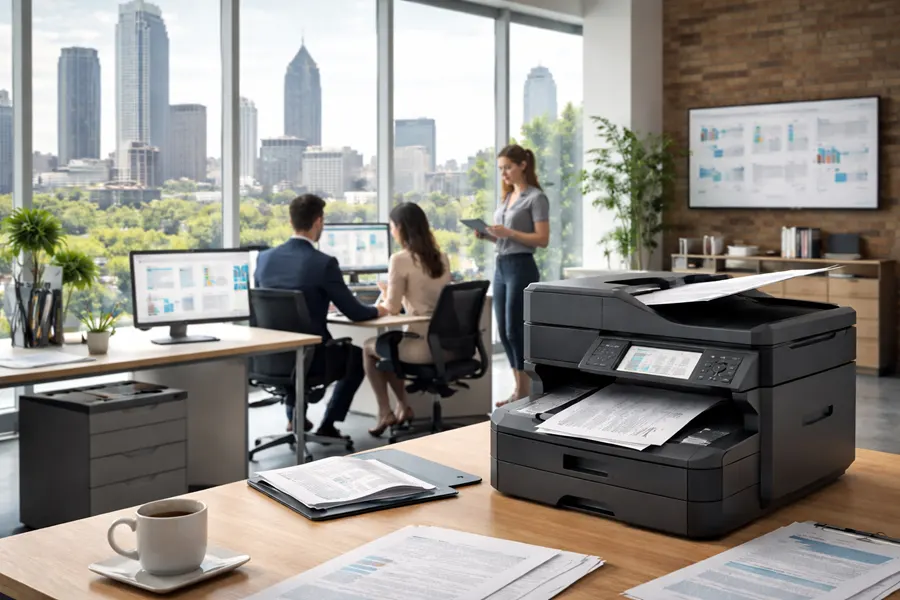
Automation reduces bottlenecks, increases visibility into process status, and helps IT respond faster to incidents. It also embeds regulatory controls into day-to-day operations instead of treating compliance as an afterthought.
What Are Key Features of Enterprise Workflow Automation?
Enterprise systems typically include:
- Integration Capabilities: Connectors and APIs that link with existing systems.
- Customizable Workflows: Rules and approval paths built for specific teams.
- Real-Time Monitoring: Dashboards and alerts that surface and resolve bottlenecks.
These features show how enterprise platforms evolve to support automated, data-driven processes.
Enterprise Workflow Automation with AI & Blockchain
Organizations have long sought better horizontal and vertical integration to coordinate work across functions. ERP and enterprise systems aimed to provide a single source of truth for data-driven decisions. Today, cloud, AI, and blockchain are shaping the next wave of ERP capabilities, with clear implications for workflow automation and cross-enterprise coordination.
Enterprise and business process automation, EF Watson III, 2023
How Workflow Automation Lowers Operational Costs
Automation removes manual steps, speeds incident detection and resolution, and shortens downtime. Pairing automated alerts with human review reduces false positives and directs staff effort where it delivers the most value.
What Are Effective Strategies for Implementing Paperless Office Systems in Atlanta?
Moving toward a paperless office cuts costs and strengthens security, but it requires planning and the right technology to succeed.
How Going Paperless Reduces Costs and Improves Security
Eliminating paper lowers printing and storage expenses and makes files easier to encrypt, version, and back up — supporting security and sustainability goals.
Steps Businesses Should Take to Transition to Paperless Systems
Practical steps include:
- Assess Current Processes: Map where paper is used and identify quick wins.
- Choose the Right Technology: Select document management and scanning tools that fit volume and security needs.
- Train Employees: Provide role-based training and change management to encourage adoption.
What Managed IT and Document Scanning Services Support Document Management in Atlanta?
Managed IT and professional scanning deliver the technical foundation — secure backups, high-volume digitization, and reliable audit trails — that make document management practical and auditable.
How Managed IT Services Improve Document Security and Compliance
Managed IT implements protections like immutable backups, encryption, and least-privilege access to limit exposure and preserve recoverability within defined RTOs and RPOs. They also support compliance through policies, continuous monitoring, and assessments so controls match legal and industry requirements.
Adding AI and analytics speeds metadata extraction, anomaly detection, and automated routing.
AI-Enhanced Document Management for Automation & Compliance
As content volumes and regulatory demands grow, legacy systems often struggle to deliver the intelligence and automation modern organizations need. Next-generation document platforms — combining SharePoint or Documentum with AI, NLP, and machine learning — automate metadata capture, enable semantic search, and support predictive routing and anomaly detection for compliance.
Next-Generation Document Intelligence: Enabling Smart Metadata, Secure Access, and
Regulatory Compliance with AI, B Chode, 2025
Advantages of Professional Document Scanning Services
Professional scanning speeds digitization, improves indexing, and reduces storage and retrieval overhead.
- Efficiency Gains: High-volume scanning is faster and more consistent than ad-hoc, in-house efforts.
- Improved Accessibility: Proper indexing and file formats make records easier to find.
- Cost-Effectiveness: Reduced physical storage and retrieval costs.
How Can Businesses Use Document Management Solutions to Gain a Competitive Advantage in Atlanta?
Reliable document workflows help companies move faster, stay compliant, and protect customer data — improving resilience and customer experience so teams decide and act with confidence and audits run smoother.
What Case Studies Demonstrate Success with ABM’s Solutions?
ABM case studies highlight faster processing, lower document costs, and stronger compliance after tailored implementations that combine technology, process design, and managed services.
How Recent Trends Are Influencing Document Management Adoption
Digital transformation, hybrid work, and tighter regulations have accelerated adoption. Organizations prioritize secure remote access, automation, and cloud-enabled workflows to meet evolving operational and compliance demands.
Frequently Asked Questions
What are the key considerations when choosing a document management solution?
Choose a solution that scales, integrates with your core systems, and is easy for staff to use. Prioritize security controls, vendor support, and proven compliance experience — and insist on clear migration and training plans.
How can businesses measure the success of their document management implementation?
Track time saved on retrieval, reductions in paper and storage costs, fewer errors, and faster approvals. Combine those KPIs with user satisfaction surveys to measure adoption and impact.
What challenges might businesses face when transitioning to a paperless office?
Common challenges include user resistance, incomplete process mapping, and inadequate training. Address them with phased rollouts, clear policies, and ongoing support.
What types of training are recommended for employees during the transition to digital document management?
Provide role-based training, hands-on workshops, short reference guides, and quick video demos — plus follow-up support so users build confidence and lasting habits.
How can businesses ensure compliance with regulations when managing digital documents?
Establish governance: access controls, audit logging, retention policies, and regular audits. Use platforms with built-in compliance features and maintain continuous monitoring and third-party assessments.
What are the environmental benefits of adopting a paperless office?
Cutting paper reduces waste and resource demand, and lowering printing and storage needs reduces energy use — supporting sustainability goals and showing responsible stewardship.